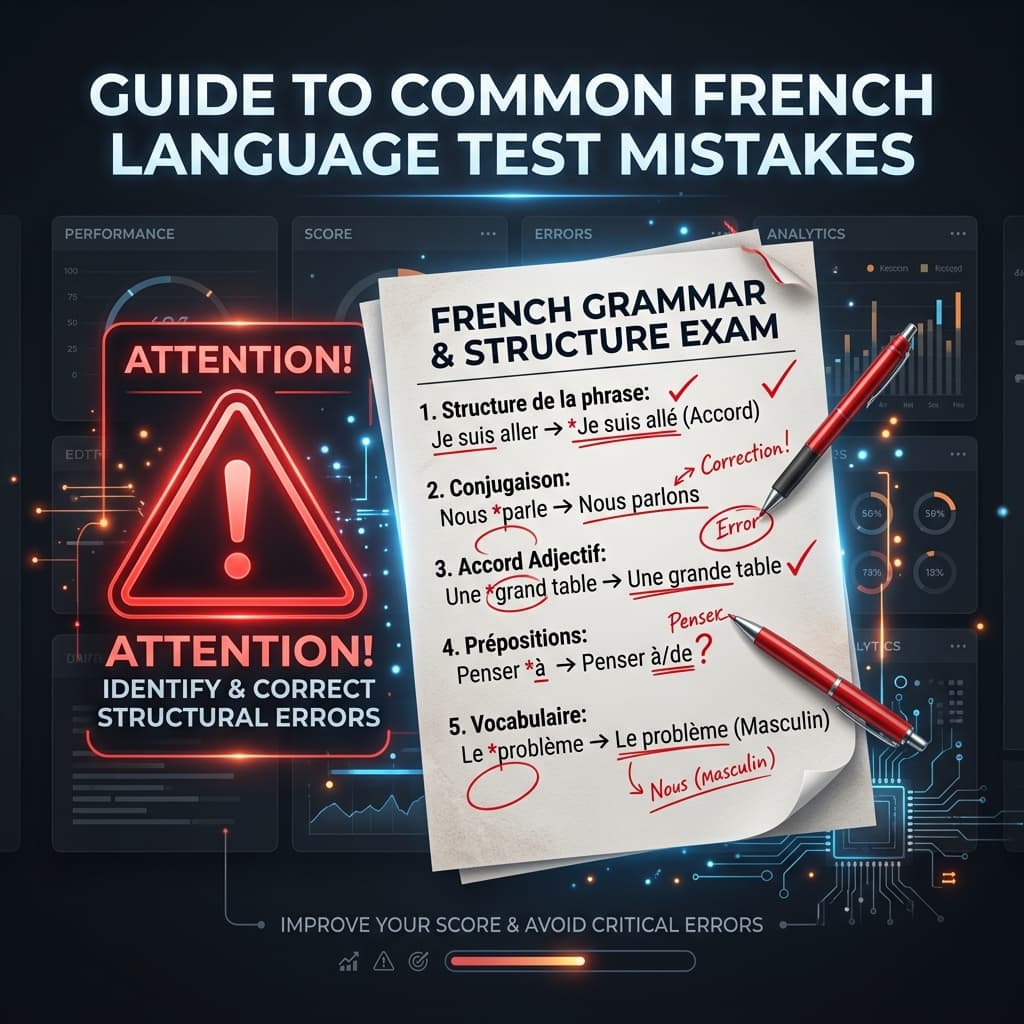
Express Entry candidates often struggle to hit CLB 9 not because they lack French skills, but because they approach the TEF exam incorrectly. Preparing for a high-stakes immigration exam requires different study habits than casual language learning. If you want the exact score targets behind CLB 9, see our TEF Canada score breakdown alongside the mistakes below.
Here are the three biggest mistakes candidates make during French preparation and how to fix them.
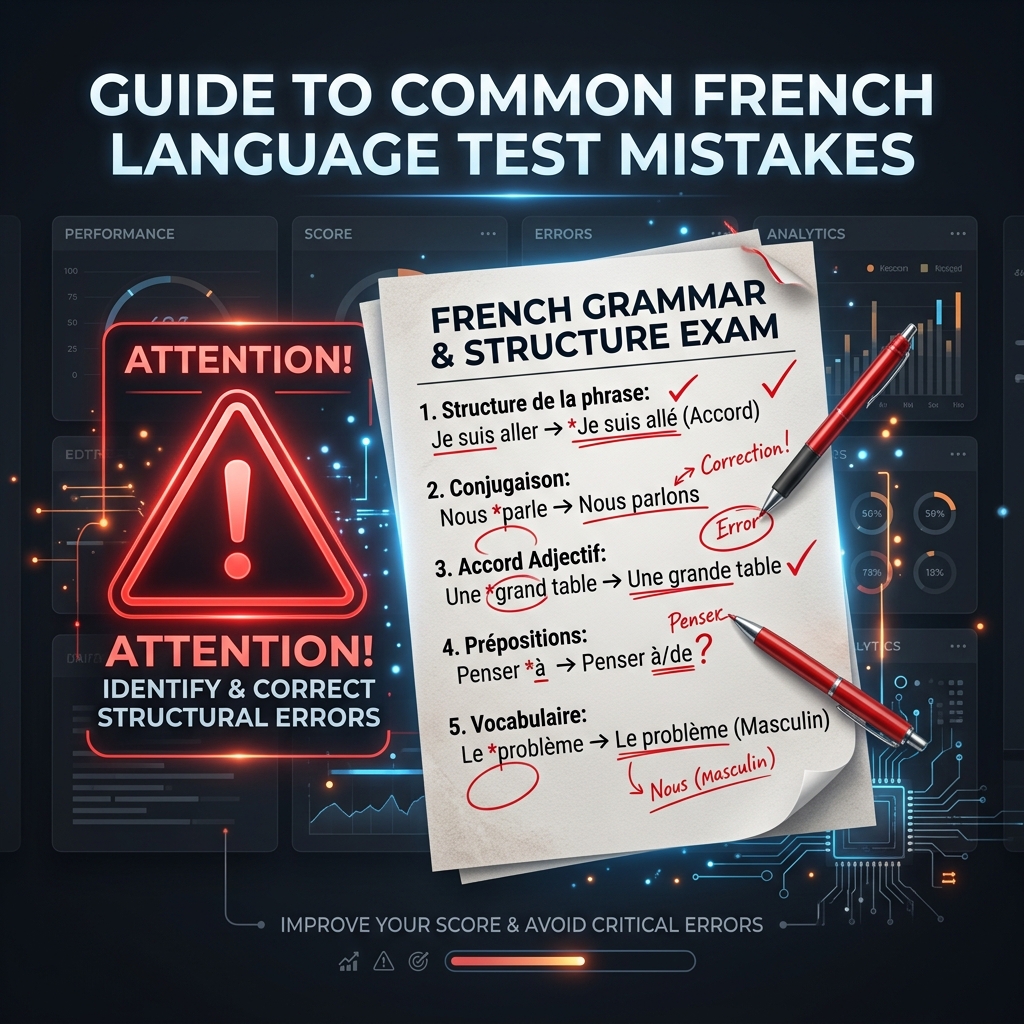
Key Takeaways
- Casual language apps teach conversational French, not the editorial reading and formal writing the TEF Canada exam actually tests.
- TEF listening plays continuously with no pause, so untimed practice leaves candidates unprepared for the real pace.
- The written section grades two specific formats, a news brief and an argumentative essay, against a strict structure rubric, not free-form writing.
1. Using Casual French Apps for Academic Preparation
Most candidates start their preparation with gamified language learning apps. These tools teach vocabulary through quick translations and simple conversational phrases.
The TEF Canada exam does not test if you can order food. Per the official TEF Canada exam structure published by France Éducation international, the test requires reading editorial arguments, writing structured formal essays, and analyzing complex debates across its Compréhension Écrite and Expression Écrite sections.
The fix: Build reading habits using actual French newspapers like Le Monde or Le Devoir. Focus on editorials and structure analysis.
2. Underestimating the Timer in Listening Exams
Listening comprehension in the TEF exam happens fast. You must listen, read multiple-choice options, and choose the correct answer under continuous audio playback. Candidates who practice without time constraints panic when the real audio player does not pause, since the Compréhension Orale section is administered as one continuous recording with no replay.
<!-- [UNIQUE INSIGHT] -->This is why timed practice matters more for listening than for any other section: reading and writing let you self-pace during practice and still transfer that skill under exam pressure, but listening comprehension is entirely dictated by the audio, so untimed practice builds a false sense of readiness that collapses the moment the real recording starts.
The fix: Take timed, non-stop practice tests. Learn to read the question prompts before the audio segment begins so you know exactly what information to listen for.
3. Ignoring the Specific Format of Written Tasks
The written section requires two specific formats: a news brief (fait divers) and an argumentative essay. A fait divers is a short, factual news item written in a fixed journalistic structure: a summary lead followed by supporting details, distinct from the argumentative essay's thesis-and-evidence structure. Many test-takers write generic essays instead of following the strict paragraph structure and cohesive markers that examiners grade. Section B alone requires justifying a viewpoint in at least 200 words, assessed by two independent trained evaluators against standardized criteria (TEF Canada Expression Écrite Section B, Rossi ELTS).
The fix: Memorize connector formulas and structure rules for each format separately. Draft under timed conditions and review your work against a grading rubric.
Quick Reference: Mistake vs. Fix
| Mistake | Fix | |---------|-----| | Using casual conversation apps | Read editorials in Le Monde or Le Devoir for formal-register practice | | Practicing listening untimed | Take non-stop timed drills; read prompts before audio starts | | Writing generic essays | Learn the fixed fait divers and argumentative-essay formats separately |
Still deciding between TEF Canada and TCF Canada? Our TEF vs TCF comparison breaks down which format fits your strengths.
These mistakes and fixes reflect TEF Canada's publicly documented exam structure, cross-referenced across independent exam-prep resources. Every Francais Pro blog post is published with BlogPosting schema.org structured data. For our editorial approach, see our About page.
Francais Pro offers structured exam prep modules and realistic simulators to help you track your readiness against these three mistakes.